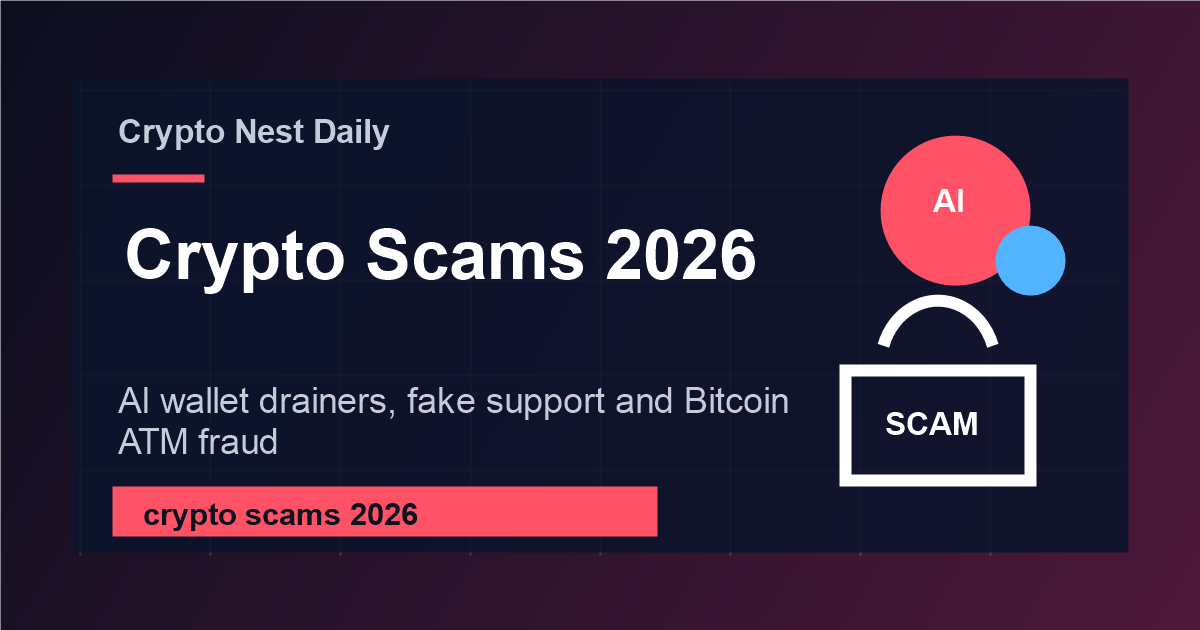
Crypto scams in 2026 look more professional than the old fake giveaway posts. Attackers now use AI-generated messages, fake support teams, social engineering, wallet drainers and long-term relationship scams to pressure users into making irreversible transactions.
The pattern is simple: scammers do not always need to hack a blockchain. Often, they convince the victim to sign, approve, deposit or reveal information voluntarily.
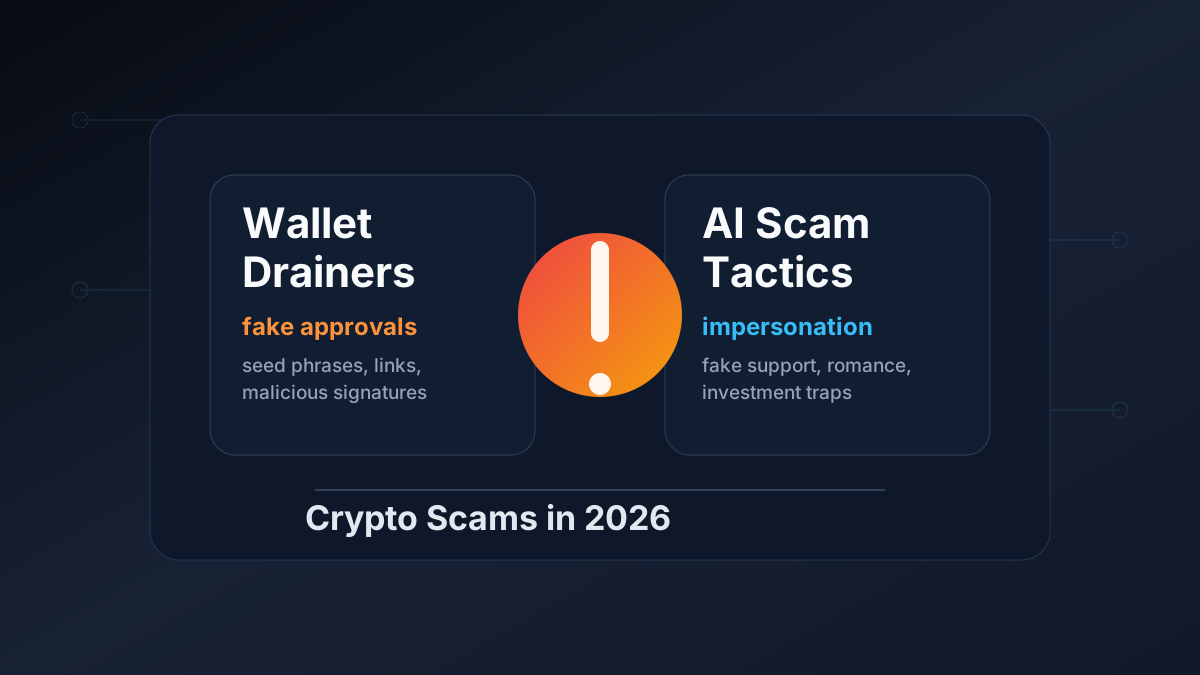
Why Crypto Scams Are Getting Harder To Spot
In earlier crypto cycles, many scams were easy to identify: misspelled websites, obvious fake giveaways and unrealistic promises. In 2026, the attack surface is broader.
Scammers can generate polished messages, fake customer support accounts, realistic profile photos and convincing scripts in multiple languages. That makes ordinary users more vulnerable, especially when pressure and urgency are added.
What Chainalysis Says About AI-Linked Scams
Chainalysis has highlighted advanced scam architectures, impersonation and AI-linked criminal activity in its 2026 crypto crime coverage. The important takeaway is not that AI is the scam by itself. The danger is that AI can make fraud cheaper, faster and more convincing.
A scammer can imitate a support agent, build a fake investment community, create fake testimonials or write personalized messages at scale. That makes trust harder to judge from appearance alone.
How Wallet Drainers Work
A wallet drainer usually begins with a link. The page may look like an airdrop, mint, staking portal, exchange claim page or security verification screen.
The victim connects a wallet and signs a transaction. The transaction may grant token approvals or authorize transfers. Once signed, the attacker can move assets quickly, sometimes through bridges, mixers or multiple wallets.
This is why users should treat every signature as a financial action. A wallet connection is not harmless if the website asks for dangerous approvals.
The Rise Of Fake Support
Fake support accounts remain one of the most common traps. A user posts about a wallet issue, exchange delay or failed transaction. Within minutes, fake helpers appear in replies or direct messages.
They may ask for a seed phrase, recovery phrase, private key or screen-share session. No legitimate wallet, exchange or blockchain team needs a seed phrase to help a user.
Pig Butchering And Long-Term Investment Scams
Pig-butchering scams are long-term social engineering attacks. The scammer builds trust through romance, friendship or business conversations, then introduces a fake investment platform.
The victim may see fake profits at first. That is part of the trap. When they try to withdraw, the platform demands taxes, fees or additional deposits. The goal is to extract as much money as possible before disappearing.
Red Flags To Watch
- Guaranteed returns: real markets do not offer risk-free crypto profits.
- Urgent deadlines: pressure is often used to bypass careful thinking.
- Private messages: support teams should not ask for secrets in DMs.
- Seed phrase requests: sharing a seed phrase gives full wallet control.
- Unknown approvals: token approvals can expose funds even after leaving a website.
- Recovery promises: many recovery services are secondary scams.
How Users Can Reduce Risk
Use a hardware wallet for meaningful balances. Keep a separate hot wallet for experiments, airdrops and new apps. Revoke old approvals periodically, and never sign a transaction you do not understand.
Bookmark official websites instead of clicking links from social media. Verify announcements across multiple official channels. If someone creates urgency, slow down.
What To Do If You Are Scammed
If funds are stolen, move any remaining assets to a fresh wallet created on a clean device. Save transaction hashes, wallet addresses, website URLs, emails and screenshots.
Report the incident to the relevant exchange if an exchange address is involved. U.S. victims can report to the FBI's Internet Crime Complaint Center. Avoid anyone who says they can guarantee recovery for an upfront fee.
Bottom Line
Crypto scams in 2026 are less about obvious tricks and more about professional-looking manipulation. The safest users are not the most confident ones. They are the ones who pause, verify and treat every wallet signature seriously.
How readers can use this scam warning
Use this article as a practical checklist before connecting a wallet, clicking an airdrop link or trusting a support account. The highest-risk moments are usually when a website asks for a wallet signature, a browser extension requests new permissions or a message creates urgency around a limited-time crypto offer.
Related security guides on Crypto Nest Daily include our crypto security news hub and the Solana, Sui and Aptos wallet warning.
Extra wallet safety checklist
- Verify the domain before connecting a wallet.
- Do not paste a seed phrase into any website or chat.
- Review token approvals after using new DeFi apps.
- Use a clean browser profile for wallet activity.
Crypto Disclaimer
This article is for informational purposes only and does not constitute financial, investment, legal, or tax advice. Cryptocurrency markets are highly volatile. Always do your own research before making any financial decision.