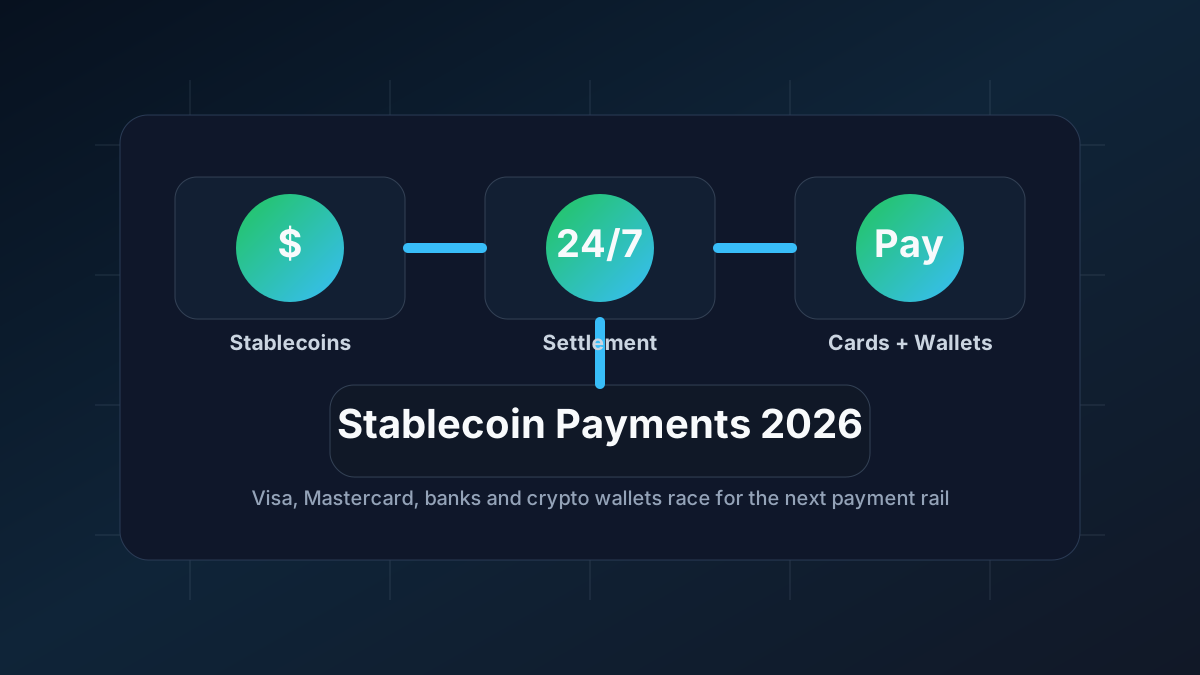
Stablecoin payments in 2026 are no longer just a crypto exchange feature. Visa, Mastercard, banks and crypto-native payment firms are all building around tokenized dollars, faster settlement and blockchain-connected wallets.
The story matters because stablecoins may become one of crypto's most practical mainstream use cases: moving value quickly, globally and often outside traditional banking hours.
Why Stablecoins Are Moving Beyond Trading
For years, stablecoins were mostly used by traders to move between crypto exchanges. That is changing. Payment companies are now treating stablecoins as infrastructure for settlement, payouts, merchant payments and cross-border transfers.
The shift does not mean every coffee purchase will happen on-chain tomorrow. It means the back-end rails behind money movement are being rebuilt in ways that can include blockchain settlement.
Visa's Stablecoin Settlement Push
Visa said in April 2026 that its stablecoin settlement pilot now supports nine blockchains and had reached a $7 billion annualized stablecoin settlement run rate. The company framed stablecoins as part of mainstream payment flows rather than a side experiment.
That is important because Visa is not trying to replace its entire network with crypto. Instead, it is testing how stablecoin rails can complement existing card, bank and wallet systems.
Mastercard's BVNK Acquisition
Mastercard announced in March 2026 that it would acquire BVNK, a stablecoin infrastructure company, for up to $1.8 billion. The deal is designed to connect on-chain payments with traditional fiat rails.
The acquisition shows that large payment networks want in-house stablecoin capability. They do not want to watch from the sidelines while fintechs and crypto-native firms build the next layer of payment infrastructure.
Mastercard's Crypto Partner Program
Mastercard also launched a crypto partner program with more than 85 companies across digital assets, banking, security and payments. The list includes exchanges, wallets, stablecoin issuers, blockchain networks and compliance firms.
That kind of ecosystem approach matters because payments require more than a token. They require identity checks, fraud controls, wallets, bank access, merchant tools, compliance and liquidity.
Why Banks Are Paying Attention
Banks are watching stablecoins because they touch deposits, cross-border payments, treasury operations and settlement. Some institutions may prefer deposit tokens or regulated bank-issued digital money, while others may connect to public stablecoins.
The likely future is not one single model. It may include public stablecoins, bank tokens, tokenized deposits and card-network settlement tools working together.
Benefits For Users And Businesses
Stablecoins can make certain transfers faster and more programmable. Businesses may benefit from quicker settlement, global reach and lower friction in some corridors.
Users may benefit from wallets that can hold digital dollars and move money across platforms. But convenience only matters if the system is safe, transparent and regulated enough for mainstream trust.
The Risks Are Still Real
Stablecoins are not automatically risk-free. Users need to understand issuer reserves, redemption rights, smart contract risk, wallet custody and local regulation.
Payment companies also need to manage compliance, sanctions screening, fraud monitoring and operational reliability. A payment rail that works at scale cannot depend only on hype.
What To Watch Next
- Settlement volume: real transaction volume matters more than announcements.
- Regulation: stablecoin laws will shape which issuers can scale.
- Bank partnerships: banks may decide whether stablecoins become mainstream.
- Wallet UX: users need safer, simpler wallets before mass adoption.
- Merchant tools: stablecoin payments need practical checkout and accounting support.
Bottom Line
Stablecoin payments in 2026 are moving from crypto-native rails toward mainstream finance. Visa and Mastercard are not betting on speculation alone. They are positioning for a future where tokenized money becomes part of everyday settlement infrastructure.
Why stablecoin payments are an important SEO topic
Stablecoins sit between crypto markets and real-world payments. Readers searching this topic usually want to know whether USDC, USDT and bank-backed stablecoins can reduce settlement costs, speed up cross-border payments and connect crypto rails with mainstream finance.
For more context, read our crypto news today hub, crypto regulation coverage and CLARITY Act explainer.
Key stablecoin questions to monitor
- Which networks payment companies actually use.
- Whether merchants see lower costs or faster settlement.
- How reserve transparency and issuer regulation develop.
- Whether users prefer stablecoins or traditional payment apps.
Crypto Disclaimer
This article is for informational purposes only and does not constitute financial, investment, legal, or tax advice. Cryptocurrency markets are highly volatile. Always do your own research before making any financial decision.