Crypto regulation 2026 is becoming one of the biggest stories in digital assets. After years of lawsuits, agency disputes and uncertain rules, U.S. lawmakers are moving closer to a formal market structure framework.
The key name readers will keep seeing is the CLARITY Act. Alongside stablecoin rules under the GENIUS Act, it could shape how exchanges, tokens, stablecoins and crypto businesses operate in the United States.
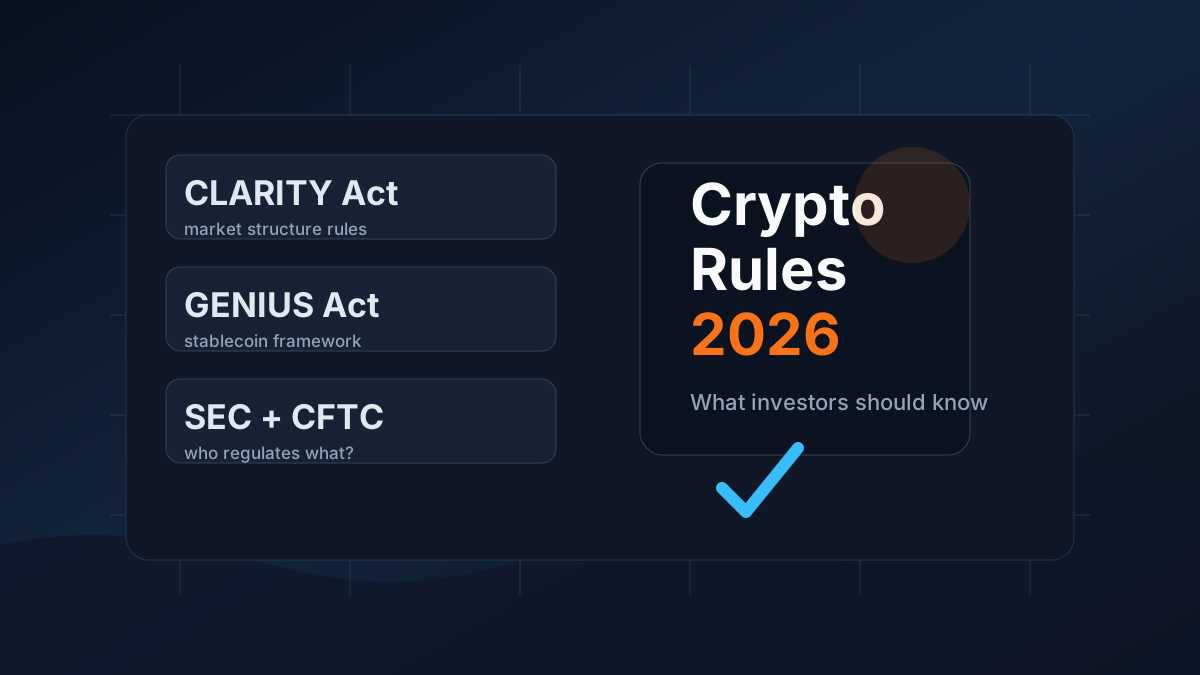
Why Crypto Regulation Matters Now
Crypto has grown from a niche market into a global financial sector, but regulation has often lagged behind the technology. That has created confusion for exchanges, developers, token issuers and ordinary users.
Clearer rules can reduce legal uncertainty. They can also make it easier for regulated banks, asset managers and payment companies to participate. But regulation does not remove volatility or guarantee that any asset will perform well.
What the CLARITY Act Is Trying To Do
The CLARITY Act is designed to create a market structure framework for digital assets. In simple terms, it tries to answer a question the crypto industry has debated for years: when is a digital asset a security, when is it a commodity, and who should regulate it?
Recent reporting said the bill advanced through the Senate Banking Committee in a bipartisan vote, moving it closer to a possible full Senate debate. That does not mean it is law yet. It means the process has moved forward.
The SEC vs CFTC Question
One of the most important parts of U.S. crypto regulation is the division between the Securities and Exchange Commission and the Commodity Futures Trading Commission.
The SEC traditionally oversees securities markets. The CFTC oversees commodity derivatives markets. Crypto assets can blur that line, especially when tokens are used for governance, payments, staking, trading or application access.
A clearer split could help exchanges know which rules apply. It could also make enforcement more predictable. For users, the practical impact may be better disclosures, clearer listings and stronger compliance requirements.
How Stablecoin Rules Fit In
Stablecoins are another major part of the 2026 regulation story. The GENIUS Act focuses on payment stablecoins and reserve standards, with the goal of making dollar-backed tokens safer and more transparent.
Stablecoins are widely used for trading, payments and DeFi liquidity. If reserve rules become clearer, large payment companies and banks may become more comfortable building around them. Still, stablecoins carry risks, including issuer risk, liquidity risk and regulatory risk.
What This Could Mean For Exchanges
For crypto exchanges, a formal market structure law could change listing standards, disclosure practices and registration obligations. Some platforms may benefit from clearer paths to compliance.
Others may face higher costs. Smaller projects may need better documentation, legal reviews and governance processes before being listed on major venues.
What This Could Mean For Everyday Users
For everyday crypto users, regulation may show up in practical ways: more identity checks, more risk disclosures, clearer product labels and fewer vague promises from platforms.
That can feel less exciting than the early internet-style crypto culture, but it may also make the market more understandable for mainstream users who want basic protections.
Why This Is Not Automatically Bullish
Many traders treat regulation headlines as bullish, but the real impact is more nuanced. Clear rules can attract institutions, yet they can also restrict certain products, increase compliance costs or limit risky business models.
The best way to read crypto regulation is not as a price signal, but as infrastructure. It may define what kind of crypto market can grow over the next decade.
Bottom Line
Crypto regulation in 2026 is about moving from legal uncertainty toward defined rules. The CLARITY Act and GENIUS Act could make the market more mature, but they will not eliminate risk, volatility or bad actors.
Why crypto regulation matters for searchers
Regulation articles often attract readers who want to know whether a new rule affects Bitcoin, Ethereum, XRP, Solana, stablecoins or crypto exchanges. The most useful way to read the CLARITY Act debate is to separate confirmed legislative progress from market speculation.
For more context, compare this regulation explainer with our crypto regulation news hub, stablecoin payments analysis and price prediction hub.
Signals to watch next
- Whether lawmakers clarify token classification and market structure.
- How exchanges respond to custody and listing obligations.
- Whether stablecoin rules support payment adoption.
- How ETF issuers discuss regulatory risk in filings.
Crypto Disclaimer
This article is for informational purposes only and does not constitute financial, investment, legal, or tax advice. Cryptocurrency markets are highly volatile. Always do your own research before making any financial decision.