Bitcoin treasury companies have become one of the most visible institutional crypto trends of 2026. Instead of simply offering crypto products, some public companies are putting Bitcoin directly on their balance sheets.
The idea is simple: hold BTC as a corporate reserve asset. The reality is more complex, especially when debt, stock issuance, market premiums and Bitcoin volatility enter the picture.
What Is A Bitcoin Treasury Company?
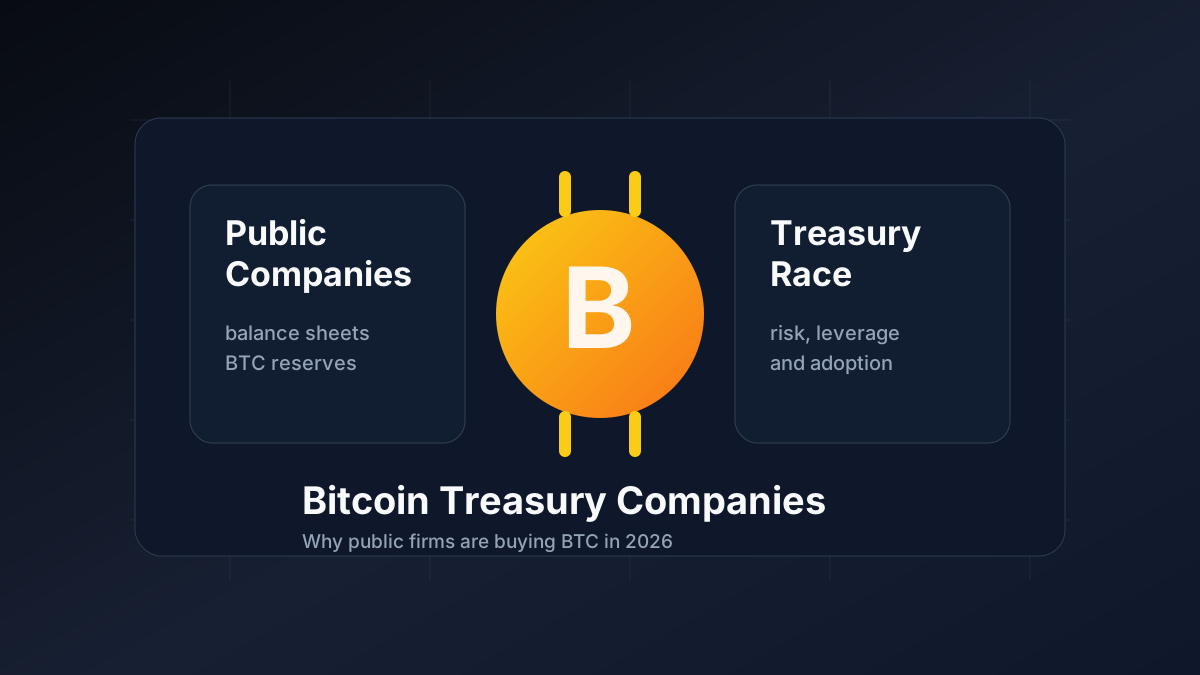
A Bitcoin treasury company is a business that holds Bitcoin as a meaningful corporate asset. Some companies started with another operating business and added Bitcoin reserves. Others are built mainly around accumulating BTC.
The most famous example is Strategy, formerly known as MicroStrategy, which pioneered the public-company Bitcoin treasury model and remains the largest corporate BTC holder.
Strategy Still Leads The Category
A May 2026 SEC filing showed Strategy reporting 818,869 BTC after a 535 BTC purchase. The same filing listed an aggregate purchase price of about $61.86 billion and an average purchase price around $75,540 per Bitcoin.
Those numbers show why Strategy is watched so closely. Its stock can behave like a leveraged expression of Bitcoin sentiment, but it is still an operating public company with its own capital structure and risks.
More Companies Are Joining The Race
The trend is no longer limited to one U.S. company. In Europe, Capital B announced in May 2026 that it acquired 192 BTC for 13.0 million euros, bringing total holdings to 3,135 BTC.
Reports based on Bitwise data also show public-company Bitcoin holdings rising in Q1 2026, with more firms adding BTC even as market conditions remained volatile.
Why Companies Buy Bitcoin
Companies may buy Bitcoin for several reasons. Some view it as a scarce reserve asset. Some want exposure to crypto adoption. Others use Bitcoin holdings to attract investors who want BTC exposure through public equity markets.
There is also a strategic branding effect. A company that becomes known as a Bitcoin treasury firm may gain visibility in crypto markets, although that visibility can cut both ways during downturns.
The Premium And Discount Problem
Buying a Bitcoin treasury stock is not the same as buying Bitcoin directly. The stock can trade at a premium or discount to the value of the BTC held by the company.
If investors pay far more than the net asset value of the Bitcoin, the stock can fall even if Bitcoin itself is stable. If the company uses debt or repeated share issuance, the risk profile becomes even more complicated.
Why This Trend Matters For Bitcoin
Corporate treasury buying can reduce available supply and add a new category of long-term holders. It also helps normalize Bitcoin as a balance-sheet asset in traditional markets.
However, it can also create concentration risk. If large treasury companies are forced to sell during stress, the same structure that supports demand in bull markets can amplify fear in bear markets.
Risks Investors Should Understand
- Bitcoin volatility: BTC can move sharply in either direction.
- Leverage: debt can magnify upside and downside.
- Share dilution: new stock issuance can affect existing shareholders.
- Premium risk: the stock may trade above or below the value of its BTC.
- Management risk: capital allocation choices matter.
- Regulatory risk: accounting and securities rules can change.
What To Watch Next
The next phase of the Bitcoin treasury trend will likely depend on financing conditions. If public markets reward BTC accumulation, more firms may try the strategy. If premiums collapse, the model may become less attractive.
Investors should also watch whether companies fund purchases with cash flow, equity, convertible debt or preferred stock. The funding method can matter as much as the Bitcoin purchase itself.
Bottom Line
Bitcoin treasury companies are an important 2026 crypto trend because they connect corporate finance with Bitcoin adoption. But they are not a simple substitute for holding BTC. They are public companies with balance sheets, management choices, market premiums and real risks.
Crypto Disclaimer
This article is for informational purposes only and does not constitute financial, investment, legal, or tax advice. Cryptocurrency markets are highly volatile. Always do your own research before making any financial decision.