Bitcoin moved back below the $80,000 area as U.S. spot Bitcoin exchange-traded funds recorded another wave of redemptions, highlighting a cautious shift in market sentiment after a sharp rebound from April lows.
The pullback came even as U.S. crypto regulation appeared to make progress, with the CLARITY Act advancing from the Senate Banking Committee. For traders, the week showed that policy momentum can help sentiment, but it does not automatically erase macro pressure, ETF selling or short-term volatility.
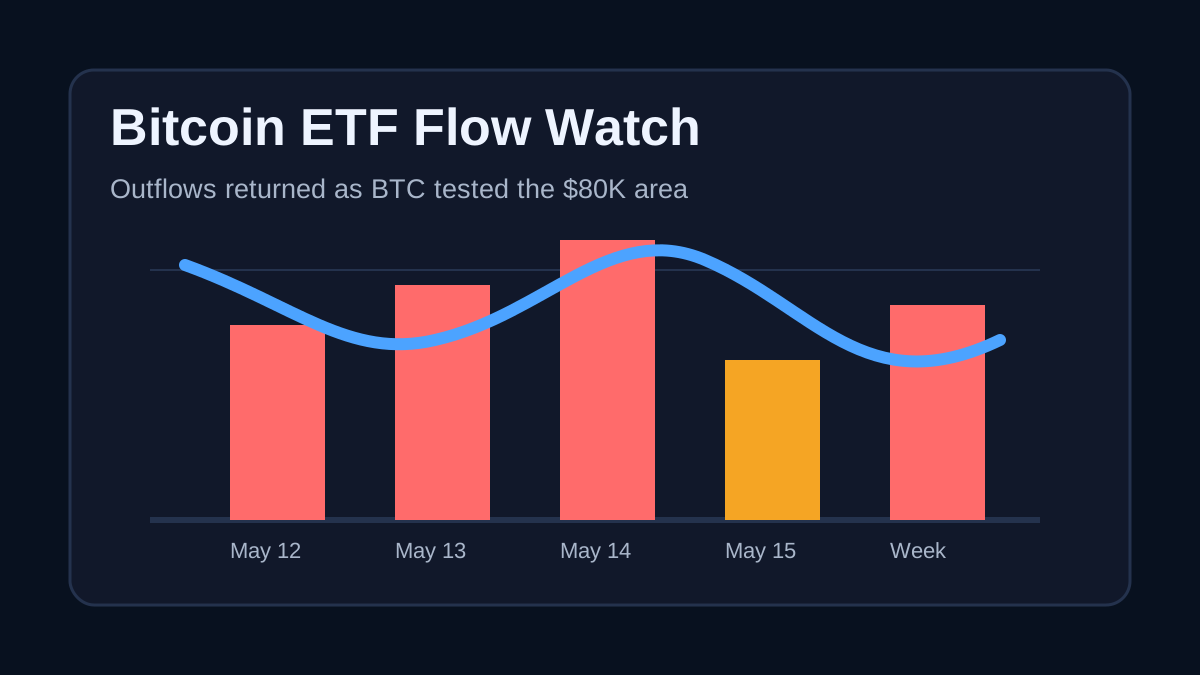
Spot Bitcoin ETFs See Heavy Redemptions
Cointelegraph reported that U.S. spot Bitcoin ETFs saw about $635.2 million in outflows on Wednesday, the largest daily withdrawal since January. The report said the move extended a previous session of outflows and put weekly flows on track for their first negative week after six consecutive weeks of gains.
ETF flows matter because they are one of the clearest public signals of institutional and adviser-driven demand for Bitcoin exposure. Strong inflows can support market confidence, while large redemptions may show profit-taking, reduced risk appetite or portfolio rebalancing.
BTC Slips Back Below a Closely Watched Level
Bitcoin's move below $80,000 followed several attempts to hold or reclaim the low-$80,000 range. KuCoin News described the weakness as part of a broader move from May 12 to May 16, when Bitcoin and Ether softened as ETF outflows and rising yields pressured sentiment.
The move does not by itself confirm a longer-term trend change. It does, however, show that traders are watching whether the recent rebound can attract renewed demand or whether sellers continue to use strength as an exit point.

CLARITY Act Progress Was Not Enough to Lift the Market
Regulatory news was not entirely negative. Coin360's weekly market dispatch said the CLARITY Act advanced from the Senate Banking Committee in a 15-9 vote, sending the crypto market-structure bill closer to consideration by the full Senate.
That development is important because U.S. crypto firms have long argued that unclear jurisdiction between securities and commodities regulators creates uncertainty. Still, markets often respond differently to long-term policy progress than to immediate liquidity signals such as ETF flows and leverage liquidations.
Ether ETFs and Broader Crypto Risk Also Weakened
The pressure was not limited to Bitcoin. Coin360 reported that U.S. spot Bitcoin ETFs saw roughly $1 billion of weekly net outflows through May 15, while Ether ETFs also recorded sizable outflows during the same period.
When both Bitcoin and Ether products see withdrawals, traders often interpret it as a broader risk-off move rather than a single-asset story. That can affect altcoins more sharply, especially tokens with lower liquidity or higher speculative positioning.
What Traders Are Watching Next
The key question is whether ETF flows stabilize. A return to net inflows would suggest that recent selling was mainly profit-taking after a strong rebound. Continued outflows, by contrast, could keep pressure on Bitcoin even if regulatory headlines remain constructive.
Market participants are also watching Treasury yields, inflation expectations and liquidity conditions. Crypto can react quickly when traditional markets become more defensive, especially when leveraged positions are crowded.
Conclusion
Bitcoin's drop below $80,000 shows that the market is still balancing two competing forces: improving regulatory prospects and near-term selling pressure from ETF flows and macro conditions. The CLARITY Act's progress may matter for the industry's long-term structure, but in the short run, liquidity and investor positioning are driving price action.
Disclaimer: This article is for informational purposes only and does not constitute financial, investment, legal, or tax advice. Cryptocurrency markets are highly volatile. Always do your own research before making any financial decision.